
Scientists stress there is currently no evidence of human infections, or community spread linked to the virus.

Airfares to Southeast Asia have surged 25 to 30 per cent, driven by high demand and limited airline seat capacity.

Prime Minister Narendra Modi has appealed to citizens to adopt austerity measures, including avoiding destination weddings abroad and reducing edible oil consumption, to mitigate the impact of the West Asia crisis on India's economy.

Iranian Foreign Minister Abbas Araghchi is in India for a BRICS foreign ministers' meeting, where discussions will focus on the escalating crisis in West Asia and its impact on global energy supply chains.

Congress leader Rahul Gandhi has criticised Prime Minister Narendra Modi's foreign policy and his remarks referencing the COVID-19 pandemic in relation to the West Asia situation.

Head of the Iranian Parliament's National Security Committee Ebrahim Azizi on Saturday said that Iran has prepared a "professional mechanism" to regulate maritime traffic in the Strait of Hormuz through a designated route, which will be unveiled soon.

Pakistan has intensified its efforts to bring the US and Iran back to the negotiating table to end the war in West Asia, following President Trump's extension of the ceasefire. Pakistani officials have engaged with Iranian, Turkish, and British counterparts to promote dialogue and diplomacy for a peaceful resolution.

"Rather than worrying, preparation is required. Contingency plans will be made for affected districts and crop changes will be considered wherever necessary"
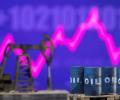
Crude oil prices are projected to fall significantly this year, driven by hopes of a peace deal between the US and Iran, which could lead to the reopening of the Strait of Hormuz, and a notable drop in Chinese demand for seaborne crude imports.

'The flip side of this is that he won't hesitate to call out India if he thinks its policies are hurting US economic interests or border US foreign policy goals.'

China has established a new county in Xinjiang province near Pakistan-occupied Kashmir (PoK) and the Afghanistan border, a move seen as strengthening security along the Wakhan Corridor and addressing concerns about Uyghur separatist militants.

Chinese President Xi Jinping has called for the Strait of Hormuz to remain open for normal passage of ships, describing it as an 'international waterway' amid rising tensions between the US and Iran.

'We should expect extreme heat, extreme rains, floods, landslides and maybe cyclones. Not just this year, in the coming year as well.'

Japan v Tunisia marks 1,000th FIFA World Cup match
Foreign Ministers from Pakistan, Saudi Arabia, Turkiye, and Egypt convened in Antalya to explore avenues for enhanced cooperation across various sectors of mutual interest, reaffirming their commitment to regional peace and stability.

'The West Asia or the Gulf crisis has shown that what we develop as national infrastructure when things are not as bad as they could be, we forget to plan for adversities.'

External Affairs Minister S Jaishankar has emphasised India's commitment to safe maritime transit and condemned attacks on merchant shipping amidst the ongoing West Asia conflict and global energy market disruptions.

Companies are already diversifying sourcing, raising prices, and reworking operating models as the disruption drags on.
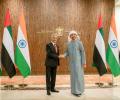
Frankly, was it really necessary in the middle of a fratricidal war for External Affairs Minister S Jaishankar to travel to Abu Dhabi for a one-on-one with the sheikh on April 12?Or, for National Security Advisor Ajit Doval to follow up on April 26? Or, for PM Narendra Modi to follow through today? There are no easy answers, notes Ambassador M K Bhadrakumar.

Iran's Supreme Leader Ayatollah Ali Khamenei claims a new chapter is emerging in the Persian Gulf due to the 'shameful failure' of the United States in the region, citing shifting regional dynamics and weakening foreign influence.

Pakistan is set to host the foreign ministers of Saudi Arabia, Egypt, and Turkiye to discuss a range of issues, including de-escalating tensions in West Asia.

The Quad grouping has expanded cooperation in critical minerals and energy, while unveiling new measures to boost maritime surveillance and port infrastructure across the Indo-Pacific. This move comes against the backdrop of China's growing military posturing in the region, with ministers reiterating strong opposition to destabilising actions and expressing serious concerns over militarisation of disputed features.

The Indian government has restricted industrial, commercial, and institutional users from purchasing petrol and diesel from retail petrol pumps, directing them to bulk sale points instead. This move, which can last up to 90 days, aims to address abnormal demand growth and prevent localised shortages caused by a significant price difference between retail and bulk fuel prices.

For India, much is at stake: Crucial energy supplies traversing the Strait of Hormuz, the fate of its 10 million citizens living and working in West Asia -- who send generous remittances home -- and its major trade links with the region.

India's procurement of Venezuelan crude oil has picked up momentum since April and the South American nation has already emerged as the third largest oil supplier to the country.

Experts' worries intensified after Pakistan commissioned its first Chinese-built Hangor-class submarine, PNS Hangor, last month.

Prime Minister Narendra Modi spoke with Iranian President Masoud Pezeshkian, condemning attacks on critical infrastructure in West Asia and emphasising the importance of safeguarding freedom of navigation and ensuring secure shipping lanes.

India's defence expenditure surged to $92.1 billion in 2025, making it the world's fifth-largest military spender, according to SIPRI data. This 8.9 per cent year-on-year rise was primarily driven by operational and procurement needs following heightened regional tensions with Pakistan in May 2025.

India has expressed strong concern over the targeting of commercial shipping in the Strait of Hormuz during the West Asia conflict, urging for the restoration of unimpeded navigation and global commerce.

The United States has announced new sanctions targeting Iran's 'shadow oil economy,' accusing Tehran of using illicit oil revenues to fund the Islamic Revolutionary Guard Corps (IRGC) and its regional activities.

United States and China have agreed that "Iran can't have nuclear weapons," and that the Strait of Hormuz must be opened, according to US President Donald Trump.

US Secretary of State Marco Rubio stated that significant progress has been made in negotiations with Iran to reopen the Strait of Hormuz, a critical global shipping lane. However, President Donald Trump remains cautious, vowing not to accept a 'bad deal' regarding Iran's nuclear programme and regional stability.
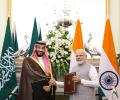
Prime Minister Narendra Modi spoke with Saudi Arabia's Crown Prince Mohammed bin Salman about the ongoing conflict in West Asia, emphasising the need to ensure freedom of navigation and secure shipping lanes.

The Ministry of External Affairs (MEA) has stated that India is closely monitoring developments in West Asia, addressing topics ranging from ceasefire efforts to maritime security and the safe return of Indian nationals. The MEA also addressed the UN Climate Change Conference and the delimitation bill.

Indian javelin thrower Sachin Yadav finished eighth in his Diamond League debut in Rome with a throw of 79.18m, significantly below his personal best. Sri Lanka's Rumesh Tharanga Pathirage won the event with a historic 92.62m throw, the second longest by an Asian.

India's fertiliser subsidy bill for the current financial year (FY27) is projected to increase by approximately 20% due to surging global prices, primarily driven by the West Asia crisis, a senior official confirmed. Despite this, retail prices for urea and di-ammonium phosphate (DAP) will remain unchanged, ensuring adequate supply for the kharif season.

Kerala is facing increased inflationary pressure due to recent hikes in petrol and diesel prices, according to Chief Minister V D Satheesan. The state's economy is also impacted by the decline in remittances from the Gulf and higher oil prices.
China has called on Iran to reopen the Strait of Hormuz and expressed appreciation for Tehran's commitment not to develop nuclear weapons, a key demand of the US to end the conflict.

Gold prices are expected to remain volatile next week as investors track geopolitical developments in the Middle East and key macroeconomic data releases that could shape the sentiment in the domestic market, analysts said.

The BRICS foreign ministers' meeting in New Delhi concluded without a joint statement due to disagreements over the West Asia conflict, with Iran blaming the UAE for the lack of consensus. India, as the host, issued a chair's statement highlighting the differing views.
